
Real bills
or, The Fed: the early years
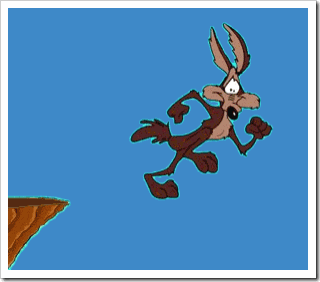
A recurring theme in my recent excavations of America’s financial history has been the perpetual banking panics that have incessantly gripped the American economic system. These periodic crises appear frequently to mark the turning point in the business cycle, whereby a rapidly expanding economy overshoots its own capacity, only to realize abruptly and too late, like Wile E. Coyote, that it has ventured too far out over the ledge.
Charles Calomiris observes that this “unusual experience of the United States was a contributor to changes in thinking that led to growing concerns about bank runs, and the need for aggressive safety net policies to prevent or mitigate runs.” The “US panic of 1907 (the last of a series of similar US events, including 1857, 1873, 1884, 1890, 1893, and 1896) precipitated the creation of the Federal Reserve System in 1913 as a means of enhancing systemic liquidity, reducing the probability of systemic depositor runs, and mitigating the costs of such events.”
Other nations had not experienced a similar rash of financial panics during the late-nineteenth and early twentieth centuries. Those countries had innovated methods to mitigate the occurrence, size, and effects of such events, including central banking, which created a lender of last resort with power to regulate the money supply, and branch banking, which improved the resiliency of rural banks and provided networks through which the banking sector could coordinate in order to nip incipient panics in the bud.
But the US was “unable to mimic this behaviour” because “US law prohibited nationwide branching, and most states prohibited or limited within-state branching.” American banks were consequently “numerous […], undiversified, insulated from competition, and unable to coordinate their response to panics[.]”1
The idea of an American central bank, meanwhile, had been anathema for nearly a century, since Andrew Jackson had eliminated the Second Bank of the United States in his Bank War. Congress had brought some organization to the financial sector during the Civil War with the National Banking Acts. Nevertheless, the nation’s banking system remained a disorganized hodge podge at the beginning of the twentieth century.
The bank war

On April 10, 1816, President James Madison signed a bill chartering the second Bank of the United States. It was a particularly bitter pill to swallow for the man who had spearheaded the Jeffersonians' rhetorical attack against the first Bank of the United States in the U.S. House of Representatives in 1791.
Americans’ deep-seated suspicion of an unholy union between the despotic governmental authority of D.C. and the occult financial wizardry of Wall Street dated back to the nation’s earliest days, as I have written. But the cautious half-measures of the nineteenth century were becoming increasingly inadequate to address the complex problems of America’s rapidly modernizing economy. Brimming with optimism about the capacity of human beings to solve their problems through concerted action, the Progressive Movement sought to augment and reform government in order to improve the lives of ordinary people.
The fiscal military state

Aside from Marbury v. Madison (1803), which I previously discussed at some length, Chief Justice John Marshall's most famous opinion is McCulloch v. Maryland (1819). As I have described, that case arose out of a controversy involving the second Bank of the United States, a federal bank chartered by Congress in 1816.
It was in that context that the titans of finance gathered for a clandestine conclave on Jekyll Island, Georgia in 1910, to hammer out a plan to establish an American central banking system (and in the process consolidate the financial power of those self same titans). The resulting Aldrich Plan was an epitome of the American genius for decentralized centralization. Instead of a single central bank, the Aldrich Plan called for dividing up the country into districts that would each be governed by regional banks, the activities of which would be coordinated by a steering committee located in Washington.
Just as the Aldrich Plan had contemplated, the Federal Reserve Act of 1913 resulted in the establishment of 12 regional Federal Reserve Banks under a 7 member Federal Reserve Board located in the nation’s capital. Banks chartered under the prior National Banking System were required to become members of their regional Federal Reserve Banks and to transfer their reserves into demand accounts at those institutions. State banks were not required join the Federal Reserve System, but in practice they needed to participate at least to some extent in order to access federal reserve bank notes, which were now the nation’s sole legal tender.
The Bonds of Liberty
With the nation’s entry into World War I in 1917, the Federal Reserve System had come online just in time to demonstrate its utility as the fiscal military state‘s central tool for war finance, as Alexander Hamilton had once dreamed. Just as in the Civil War, Professor White writes, the “federal government was faced with financing a massive war effort.”
The federal government had funded that prior war with a mix of income taxes and greenbacks, America’s first ever fiat currency. Income taxes had subsequently been held unconstitutional by the Supreme Court but then been ratified by the Sixteenth Amendment. Nevertheless, the government was “loath to impose income taxes at the level necessary to fund mobilization, and printing federal paper money had resulted in rampant inflation during and after the Civil War.”
Greenbacks

I previously described how in the early modern era the “holder in due course” doctrine made private debt instruments negotiable, so that they circulated as mediums of exchange (paper money). In that way, they could substitute or even supplement the money supply consisting of gold and silver. Paper currency could facilitate commercial activity by amelior…
So, “a third option was proposed: a combination of increased income taxes and the issuing of government bonds, which members of the public could purchase and redeem after a designated time interval.” War bond drives, “which featured advertisements appealing to the patriotism of the public, [were] a marked success, eventually raising between 53 and 58 percent of the revenue devoted to the war effort.” According to Donald Hester, this domestic war finance campaign involved “four large Liberty Loans and a Victory Loan in 1919 that required extensive Federal Reserve involvement[:]”
US bonds were sold to the public on an instalment plan by member banks; the interest rate banks charged on the unpaid balance on a bond was equal to the coupon rate on the bond. Member banks, in turn, discounted short-term US debt at Federal Reserve banks at an interest rate below the yield on the debt, which allowed them to recover their costs of instalment lending.
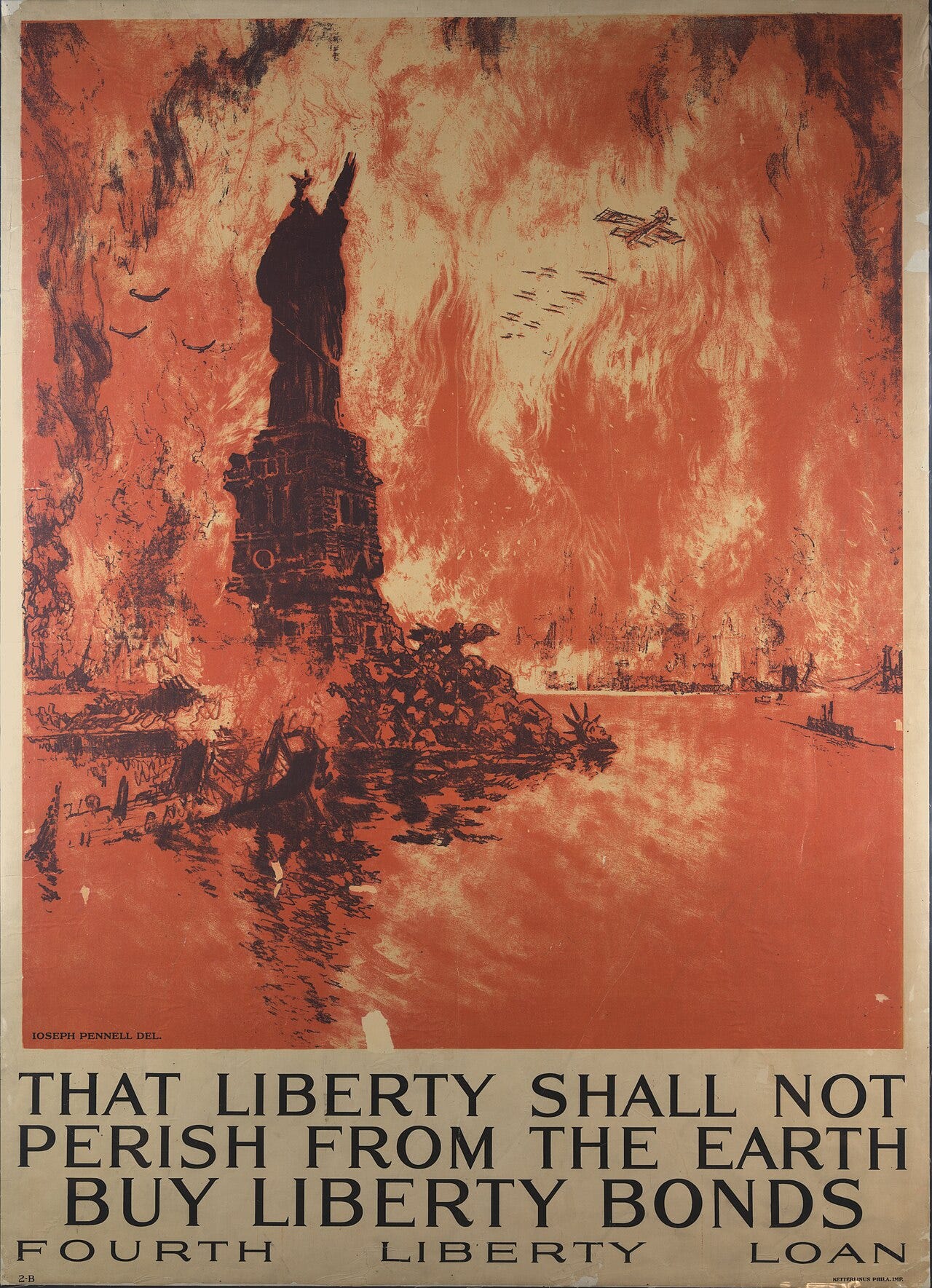
As a result of the success of the Liberty Loan program, “US government interest-bearing debt rose from $1.0 billion at the end of 1916 to $25.5 billion at the end of 1919, and would never again fall below $15 billion.” Federal Reserve Banks, meanwhile, offered member banks preferentially low discount rates for such government debt (until the end of Victory Loan in 1919, after which the real bills doctrine, discussed below, took hold).
The discount rate is the interest rate charged to a member bank for a loan from the discount window. As we saw last time, providing emergency loans to member banks at the discount window, collateralized by the banks’ own illiquid securities, was the major mechanism by which the Federal Reserve System could inject liquidity into the financial system and act as a lender of last resort to bail out ailing banks.
The Lender of Last Resort

According to Gresham’s Law, bad (i.e. low value) money chases out good. Gresham’s Law initially seems counter-intuitive, because in general we would expect a commodity to be preferred as a medium of exchange if it has the properties of “good” money which I have
Prior to World War I, Federal Reserve Banks had maintained “schedules of discount rates that varied across the quality and maturity of discounted paper and the amount of borrowing by a member bank.” But once the Federal Reserve began offering special rates for government debt, “member banks almost exclusively offered it as collateral when borrowing” and the “discount rate effectively became the rate charged on government debt.”
I previously described how, despite the gargantuan mobilization involved in waging the Civil War, the federal government had mostly wound back down to its sleepy nineteenth century ways after Appomattox. On the other hand, White argues, “in contrast to the nearly complete rollback of federal administrative power that took place after the Civil War, the federal government maintained an active regulatory presence after the end of World War I, even though the war has been the genesis of much of its involvement.”
The nineteenth century’s “implicitly hostility toward, or lack of capacity to envisage, a federal government prepared to take an active role in the lives of Americans had dissipated by the second decade of the twentieth century.” That now seemingly quaint belief in limited authority was replaced by the “idea of affirmative government, administered by non-partisan ‘experts,’ by policymakers who designated themselves ‘progressives[.]’”
The increasingly active efforts of the Federal Reserve to take control of the monetary system and regulate the banking sector reflected only one aspect of this larger trend. As we have already seen, the government’s ability to fund its augmented administrative capacity through debt finance, facilitated by the Federal Reserve System, has never since left us.
This overconfidence in the capacity of federal government to paternalistically regulate the national economy for the welfare of Americans perhaps reached a high-tide mark with the ill-conceived Eighteenth Amendment, which initiated Prohibition. Yet while the experiment with outlawing alcohol failed spectacularly, the government was nevertheless drawn further and further into economic regulation with the advent of the Great Depression at the end of the 1920s. Nor can it even be said that the feds learned anything from Prohibition itself, which they have blithely recapitulated in our own time with the War on Drugs, to similar results.
Inflationary feedback
Hester argues that the “early years of the Federal Reserve System were marked by struggles to define the distribution of power between Federal Reserve banks and the Board[.]” In particular, the D.C.-based Board struggled to rein in the New York Federal Reserve Bank‘s use of what are called open market operations to influence financial markets.
Open market operations refer to a Federal Reserve Bank buying and selling securities, specifically Treasury bonds, on the open market (rather than directly from the Treasury Department) in order to inject or withdraw money in the economy. Unlike the discount window, which is a passive mechanism that depends on financial institutions coming to the Federal Reserve seeking cash, open market operations give to a Federal Reserve bank the initiative to go out and solicit transactions.
The discount rates charged by Federal Reserve banks were subject to control by the Federal Reserve Board. Open market operations, on the other hand, were directly overseen by the Open Market Investment Committee (OMIC), which was dominated by New York Reserve Bank Governor Benjamin Strong.2 Thus, Hester suggests that “[w]hile proposals to change discount rates originated with Federal Reserve banks, they required Board approval, which may explain why Strong preferred to lead with open-market operations.”
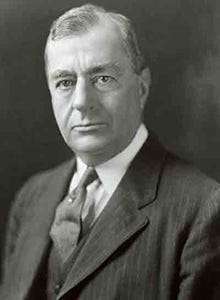
A major point of disagreement between Strong and the Board revolved around the correctness of something called the real bills doctrine. Hester writes that whereas ”Governor Strong understood that the real bills doctrine was invalid[,]” the Board “continued to support the real bills doctrine.”
The essential idea of the real bills doctrine is that Federal Reserve banks should only lend to banks at the discount window based on commercial paper like bills of exchange that finance transactions for actual goods and services (as opposed to government issued bonds). The theory behind the real bills doctrine is that basing money creation on “real“ commercial transactions will prevent inflationary over-expansion of the money stock. As Humphrey explains:
The doctrine states that money can never be excessive when issued against short-term commercial bills arising from real transactions in goods and services. More precisely, the doctrine contends that so long as banks lend only against sound, short-term commercial paper the money stock will be secured by and will automatically vary equiproportionally with real output such that the latter will be matched by just enough money to purchase it at existing prices.
Fat Stacks: An Origin Story

Over the last few posts, I have been interested the early history of American monetary policy, a supremely obscure topic, to be sure. Last time, I asked, what’s the deal with money, anyway?
The fundamental flaw with the real bills doctrine had been identified more than a century earlier by Henry Thornton, in An Enquiry into the Nature and Effects of the Paper Credit of Great Britain (1802), wherein he made the obvious observation that an increase in the price of something does not necessarily mean there is more of it. On the contrary, prices react to the supply of money in the economy.
Thus, if a Federal Reserve Bank increases the money supply on the basis of the face amount of some existing commercial bills, that will increase prices so that the face amount of future bills will be higher (without reflecting any increase in economic activity), which will in turn trigger a larger injection of cash, and so on. The real bills doctrine will lead to an inflationary feedback loop between price and money supply. As Humphrey describes:
In this way, price inflation would induce the very monetary expansion necessary to perpetuate it and the real bills criterion would provide no effective limit to the quantity of money in existence. Here is the error of the real bills doctrine, namely the tendency to treat prices as given when in fact they vary directly with the money stock. Associated with this is the failure to perceive the two-way inflationary interaction between money and prices that results once money is allowed to be governed by the needs of trade.
At the same time, though, by creating an artificially sharp distinction between “real” bills and bills that are supposedly “not real,” (i.e. based on speculation rather than productive economic activity), the doctrine can conversely lead to (or at least fail to prevent) deflation. If banks are facing a liquidity crisis in the midst of a financial panic and come to the discount window seeking cash with bills that the Federal Reserve doesn’t think are “real,” it will not discount the paper (meaning lend at a low interest rate so the bank doesn’t suffer a run) ... which was the whole point of the Federal Reserve in the first place.
Friedman and Schwartz contend in their seminal monetarist work A Monetary History of the United States, 1867-1960, that over the course of the 1920s Governor Strong discovered how the Federal Reserve could regulate the money supply through open market operations and the discount rate, and in the process offset or prevent economic recessions. Whether Strong had indeed discovered the secret of counter-cyclical3 monetary policy, however, we will never know, because he died of tuberculosis in October 1928.
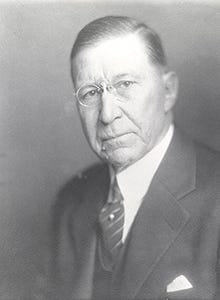
With Strong’s decline, a leadership vacuum emerged at the Federal Reserve. Hester writes that “[a]fter [Strong’s] death the struggle for control continued between his successor at the New York bank, George L. Harrison, and the Board; the latter argued that the real bills doctrine was not dead and that reserve banks should take direct action to penalize member banks making loans that supported security speculation.”
Exactly a year after Strong’s death, the grand-daddy of all financial panics, the Great Stock Market Crash of 1929, found the Federal Reserve asleep at the switch. Belatedly, the Federal Reserve scrambled to expand credit and liquidity through open market operations and lowered discount rates. But, consistent with the real bills doctrine, they refused to help banks that had speculated in stock market call loans.
According to Humphrey and Timberlake, Federal Reserve Boardmember Adolph C. Miller launched a “Direct Pressure” campaign in late 1929. Under that initiative, member banks seeking relief at the discount window were required to swear they had never engaged in speculative stock market lending. Unable or unwilling to do so, 9000 banks failed and the money supply contracted by one-third.
Thus, in the face of the greatest banking crisis in American history, the Federal Reserve “more or less let the banking system collapse, allowed the money supply the collapse, and allowed the price level to fall,” as the Federal Reserve readily admits today. Monetarists such as Friedman and Schwartz believe that it was these bone-headed pro-cyclical actions of the Fed that transformed the Panic of 1929 into the Great Depression.
Economic historians debate to this day to what extent Fed policies were to blame for the Great Depression and we will probably never know the full answer. It does seem obvious in hindsight that the policy prescriptions of the real bills doctrine did not help matters. Nevertheless, the quixotic obsession with “real bills” would continue to drive Fed thinking for years to come.
Nationally chartered banks would not be authorized to branch until the 1927 McFadden Act.
The heads of individual Federal Reserve banks were called “governors” before 1935, but since then they have been known as “presidents.” To make things extra confusing, though, members of Federal Reserve Board are now called “governors.”
Counter-cyclical actions are intended slow down and blunt whichever direction the economy is going (for example, decrease inflation). Pro-cyclical actions, conversely accelerate what the economy is doing.